Monday, 16 June 2014

Economic and Demographic Trends for China


Key Chinese Trends

The link above looks at, through graphs and charts economical and demographic data which will be useful to analyse in you section A essay. 

Factors Affecting the Success of Mergers and Takeovers

Another section B topic area - Looking at factors that judge a successful takeover/merger. This also includes failed takeovers/mergers. Good examples to use in your exam so do some research

Mergers and Takeovers - Impact on Stakeholders


Mergers and Takeovers - Impact on and Reaction of Stakeholders

Link above gives you a summary on the impact on shareholders. REMEMBER - it is very important to consider stakeholders and analyse the overall impact (Section B)

Mergers and Takeovers/Acquisitions

Impact of Mergers and Takeovers on Business Performance

Open the link to view a presentation on the above topic. Remember, this topic is related to Section B

Applying Lewins Model - An example


If you are struggling to to understand how to apply Lewins model of change then open the link below, read the information and watch the video as it shows how Lewins model can be used to go from a struggling company to a successful one.

Applying Lewins Model - An example

BUSS4 (Section A China) Webinar


A complete overview of Section A China. Watch this to gain a better understanding


BUSS4 (Section B) Webinar


A complete overview of BUSS4 Section B. A must to gain the relevant understanding. Watch all of it. 


Ethical Challenges in China (Taken from http://www.ibe.org.uk/userfiles/chinaop.pdf)


Corruption
Some of the key ethical challenges that face companies seeking to implement a business ethics programme and operate with high ethical standards in China are discussed below.
In Transparency International’s (TI) Corruption Perception Index 2011, China is ranked 75th out of 185 countries. This has been a consistent score since 2008. Exploring this more deeply, the TI Global Corruption Barometer 2010/2011 found that 46% of the 1,000 Chinese respondents felt that the level of corruption in the Country had increased and just over a third considered the Government’s actions ineffective in combating corruption. When respondents were asked “To what extent do you perceive the following institutions in this country to be affected by corruption?”, business was seen as the most corrupt institution, closely followed by political bodies and public officials.

Whilst bribery is highly prevalent in all sectors in China, it is particularly common in sectors such as construction (driven by rapid economic development and massive urban expansion and the high number of government-funded construction projects), the extractive industry and textile manufacturing (falsification of factory audits is common). Other recent corruption scandals have focused on the NGO sector with NGO officials using donations to afford luxury lifestyles for themselves rather than the donations going to the causes they were intended for. 

It can be difficult for foreign-owned companies operating in China to compete against SOEs, or companies in which the State has a stake, on an even basis; common corruption risk areas include dealings with public officials, lack of separation of public officials from management in SOEs, lack of transparency when entering joint ventures with Chinese companies, and requirement to use agents. Facilitation payments, also known as ‘kickbacks’ or ‘backhanders’ are a common form of bribery in China.


Speaking up 
Reflecting the Confucian values of loyalty to one’s group, respect for superiors in a hierarchy, and avoiding loss of ‘face’, the willingness of Chinese to speak up or ‘blow the whistle’ on fellow employees if they become aware of unethical practice is low. In China, the concept of reporting misconduct, particularly through the use of anonymous helplines, can be equated with negative historical events such as the Cultural Revolution and employees often view reporting as an ‘all risk, no reward’ activity. 


Human Rights
Human rights remains a controversial topic in China with a focus on issues such as labour standards in the supply chain, child labour, human trafficking, civil and political rights. High profile scandals have included the spate of suicides in the Foxconn factory in the Shenzhen province over poor factory working conditions in 2010-2012,37 child labour among Nike suppliers in the 1990s and the arrest of human rights activists. Recent research by China Labour Watch found that working conditions were “deplorable" across Apple’s Chinese suppliers; the key issues being excessive working hours, low wages, overcrowded/dirty dormitories, hazardous working conditions, inadequate trade unions, excessive use of agency labour, poor food and routine cheating of overtime pay.38
The Chinese Government has said that human rights are improving. Some major manufacturers doing business in China have raised wages to address problems of increasing employee turnover and even suicides (e.g. Foxconn and Honda). 


Discrimination
Discrimination against women in the workplace in China is a common problem. Few women are found in senior positions in Chinese companies, reflecting the ‘masculine’ orientation of the Chinese culture and the reluctance to speak up or ‘cross’ a male colleague. Sexual discrimination at work is not uncommon with junior female employees often finding it difficult to say ‘no’ to sexual advances and still maintain their jobs. Few Chinese businesswomen would consider it suitable to travel alone or with a male colleague; this limits their prospects for promotion in a country which relies on personal contacts to transact business.

Rural migrants vs. urban citizens and ethnic discrimination are also pertinent issues. Migrant workers are often considered inferior by their urban counterparts and endure poorer working conditions, lower wages, living conditions and longer hours. They often do not benefit from the protection of China's labour laws due to


Environmental degradation
China’s cities have grown so quickly that the Country now has more urban centres than most Western nations. It is predicted that by 2020, China will have 400 cities with at least 250,000 middle-class inhabitants – and 50 of those cities will have more than 1 million middle-class inhabitants.44 With such rapid growth, environmental degradation has become a real problem for China. 


Overview of chinese Economy & Government (Taken From http://www.ibe.org.uk/userfiles/chinaop.pdf)


Economy and Government of China
  • The People’s Republic of China (PRC) is the second biggest economy in the world behind the United States of America and has the largest population of any country at 1.3 billion people.
  • Although still officially a Communist country, China’s economy has changed during the last quarter of a century from a centrally planned system that was largely closed to international trade, to a more market-oriented economy that has a rapidly growing private sector and is a major player in the global economy. 
  • Some of the biggest companies in the world are found in China. Their names largely unknown in the West, some operating in over 50 countries, they control extraction, manufacturing, supply and distribution networks in many different industries.
  • The development of the private sector – led by an emerging class of entrepreneurs – has been crucial in this shift. 
  • In 1978, the first year of post-Cultural Revolution economic reforms in China, state-owned enterprises (SOEs) accounted for more than 90% of the country’s GDP; this has since fallen to about a third. 
  • However, boundaries between business and the State remain blurred and to further complicate matters, boundaries between the State and the Communist Party of China are also vague. 
  • Public officials may be managers in private enterprises yet the State may be the majority shareholder in a company and the Party organisation within the enterprise will exercise much more influence and power than the notional shareholder which is the State. 
page8image2976

  • Economic development has been more rapid in coastal provinces than in the interior. 
  • By 2011 more than 250 million migrant workers and their dependents had relocated to urban areas to find work and there is a strong rural/urban divide in many cities.
  • Shanghai's migrant population, for instance, soared from 9 million in 2000 to 23 million people in 2010.
  • However, as younger generations have higher expectations of quality of life than their predecessors, there is some evidence that they are now questioning low pay and poor benefits and are less interested in physically demanding jobs such as construction and manufacturing. 
  • Environmental degradation has been a significant side effect of migration and the growth of industry in China, causing serious air pollution, soil erosion, and water scarcity problems. The country continues to lose arable land both through soil erosion and economic development, increasing its dependencies on imported goods.

Looking ahead, the Chinese Government faces several economic development challenges:
  • To sustain adequate job growth for tens of millions of workers laid off from SOEs. The loss of the ‘iron rice bowl’ (Chinese idiom referring to the system of guaranteed lifetime employment in state enterprises) has meant that, along with migrants, there are many new entrants to the private sector workforce;
  • To reduce corruption and other economic crimes;
  • To contain environmental damage;
  • To address social strife related to the economy's rapid transformation and ageing population (a demographic consequence of the ‘one child’ policy that China implemented in 1979);
  • To reduce economic inequality as the gap between the rich and the poor continues to grow (according to official figures the top 10 percent of urban Chinese earn about 23 times that of the poorest 10 percent);9
  • To achieve a shift from an export-oriented economy towards one more weighted towards domestic consumption. 

The Worlds Biggest Economies

Worlds Biggest Economies 2014

The CNN article above shows you the largest economies in the world in accordance to GDP.

Where is China? 

NOW, research and find out who has experienced the highest growth rate in the last 10 year.

Mergers and Aquisitions (2013-2014) Section B Information

List of mergers and aquisitions

The link/article above lists key mergers and acquisitions in 2013-2014. You should familiarise yourself with at least four of them to prepare for a question related to the topic.

Think about:


  • The reason for the merger/acquisition
  • Who does the merger/acquisition benefit 
  • Benefits and drawbacks of the merger/acquisition 


Monday, 9 June 2014

Tuesday, 27 May 2014

Essay Plan

 Use the plan below to structure your essays

Essay title:

Key hooks:

Key/terms / concepts:
First key argument:
Point
Evidence/Explanation/Examples


First alternative argument:
Point
Evidence/Explanation/Examples


Second key argument:
Point
Evidence/Explanation/Examples


Second alternative point:
Point
Evidence/Explanation/Examples


Depends on factors:


Evaluation:

Which of your points are most significant?

What is your overall conclusion?

More Relavant Theories you can Apply


  1. The Value of Relevant Theories and Models

    The BUSS4 examiner likes relevant use of models...
    “Some students made effective use of the Ansoff matrix to highlight the riskiness of different strategic options.”
    (extract from June 2012 BUSS4 Examiner’s Report)

    Some great reasons to apply theories and models in your essays:
    • They provide a framework for analysis
    • Makes it easier to compare and contrast different research examples
    • They help explain strategic options and analyse/evaluate the choices made
    • Provide the “language” for strategy – demonstrate use of business terminology 
    • Adds credibility to an answer – the right theory properly applied
    • Can be used in both Section A and Section B essays

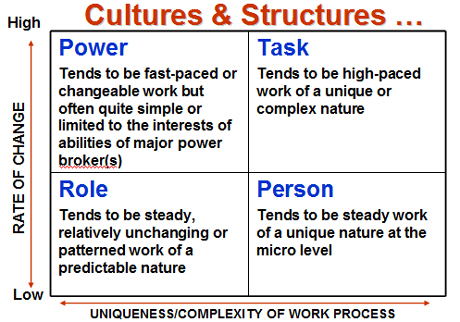
    Making Strategic Choices: Ansoff, Lewin, Handy and Porter
    A quick reminder about these classic models of strategic choice: 


    More information about Porters Generic Strategies
    http://www.slideshare.net/dipalij07/porters-generic-strategies-with-examples


    Handys Model on Organisational Culture


    More information about Handys Model of Organisational Culture http://www.tutor2u.net/business/strategy/culture-types.html

Don't Forget PEEL


Writing Great Paragraphs – the PEEL Technique

Great essays are built around a well-developed chain of argument that answers the question using a small number of well-argued points. We call these “chunky paragraphs”.
Each paragraph should make just one point. Each point should contain several stages of analysis and use of good real world business examples. Keep looking back at the essay title to ensure you are focused and link your answer back to the trigger words in the question. Towards the end of each paragraph you should also bring in some evaluation.

A useful acronym for writing each paragraph point is PEEL 

P make a POINT
E use EXAMPLES and EVIDENCE 
E EVALUATE
L LINK BACK to the QUESTION POINT

Key Terms for BUSS4


Open the link below to view a host of terms you should know for BUSS4 - If there are any you don't recognise, be sure to learn them


BUSS4 Glossary

How and Why? A Guide to GOOD ANALYSIS


How & Why. These are the two important words for students preparing for BUSS4 and as they practice their essay technique.

So, why is that? And how can they be used?
The source of their importance lies in the skill of analysis…
The challenge for students is to demonstrate to the examiner that they can respond to each chosen question with a logically-argued essay. A logical answer is one in which the argument is developed through relevant points, properly explained and supported by evidence. The use of How and Why is a great way to help "properly explain" a point and make it easier to reach Good Analysis.
In our BUSS4 exam coaching days we practice the tutor2u Stepping-Stones method for developing a 

logical chain of argument. By thinking about How & Why, the Stepping Stones method becomes much easier! 
Let's look at an example of this in action by considering the recent decision by Tesco to withdraw from the US grocery retailing market. 


Tesco's decision is a good example of retrenchment. It has decided to cut its losses in the US in order to focus the business on better investment opportunities. The result for Tesco shareholders is a £1.2bn loss on the US project.
It's a great example to use in a BUSS4 essay if it helps support a point that is relevant to the question. However, on its own, the information above is not really enough. You need to explain to the examiner why a strategy of retrenchment might be a suitable choice and how the case of Tesco helps support this argument.

So, let's take this step by step and see if we can develop some logical analysis using How & Why as our prompts?

WHY might a firm decide to adopt a strategy of retrenchment?
Retrenchment is about reducing the scale or scope of a firm's operations - for example by closing a business unit, implementing significant cost reductions or scaling back investment plans. Often a strategy of retrenchment is forced on a firm do to poor financial performance. It can also be adopted where a firm wants to make a change in strategic direction.

WHY did Tesco originally decide to enter the US market?
Tesco has pursued a strategy of international expansion in many territories - and with great success. Fresh & Easy launched to great fanfare in November 2007 – just before the recession and sub-prime mortgage crisis swept through the US causing American customers to retreat to the security of familiar retail brands.

WHY did Tesco decide to review its investment in the US? 
Because their US Chain (Fresh & Easy) continued to incur heavy losses despite sustained efforts to improve the grocery retailing format. Tesco had tried to make a success of the business for over 5 years.

WHY was Fresh & Easy incurring heavy losses?
Because it did not have sufficient economies of scale to enable the business to be competitive and revenues were not enough to cover substantial fixed costs. The business was also criticised for its retail format.

HOW can a successful retailer like Tesco get it wrong in the US?
Industry experts have also criticised Fresh & Easy’s use of self-service check-out stands which confused consumers used to heavy store helper presence. The chain’s lack of vouchers and coupons alienated price-sensitive shoppers.

HOW might a decision to close Fresh & Easy be a difficult decision for Tesco to take?
Because Tesco had developed a strong reputation for successful international expansion and the attempt to enter the intensely competitive US market was high profile. Tesco management consistently reassured shareholders that they were confident that they could make a success of Fresh & Easy.

HOW will a strategy of retrenchment work for Tesco in the US?
Tesco will attempt to sell Fresh & Easy and its 200 stores in California, Arizona and Nevada. If buyers cannot be found, then Tesco will need to close the stores and settle outstanding liabilities including redundancy costs and leases.

WHY might a strategy of retrenchment involve significant costs for Tesco?
Because there is no guarantee that a buyer will be found for the Fresh & Easy store portfolio and support infrastructure (e.g. distribution centres). The Tesco plc Board has estimated that it will cost Tesco a further £1bn in terms of the difference between what it invested in Fresh & Easy and any potential sale value.

HOW will shareholders react to the retrenchment?
In general shareholders are likely to be relieved that the business has cut its losses in the US. Whilst a £1.2bn loss on Fresh & Easy is a large amount, it is a relatively insignificant amount compared with the overall value of the business. As a result of the retrenchment, Tesco should be better able to focus its resources on the core UK retailing brand and other better-established international operations.

Localisation by McDonalds


A slideshow video showing how McDonalds localises. Gets interesting from 1 min 50 secs onwards as it explains what they do in China and India. A good source of information and an example for you to use in section A


Why Did Facebook Buy Whatsapp?


Facebook paid £19 billion for messaging app Whatsapp!!! How is that justified?
An example of acquisitions. A good example to use - Do some reading on this


Barclays Boss Antony Jenkins on the Bank's Future Agenda

Antony Jenkins (CEO of Barclays) talking about the banks new strategy of retrenchment and discussing external economic factors which has forced it to amend its strategy. 

Remember 19,000 job losses worldwide in the next 3 years, mainly in investments and deciding to concentrate on retail banking instead.  
(Mainly Section B)